
Graphite, refractory materials, binders, and specialty inputs are staged around the production requirement.
A practical production flow for high-heat industrial crucibles.
From material preparation to firing, finishing, inspection, and packaging, the GFY process is built to feel like real shop-floor manufacturing.
Production timeline
How crucibles move through the shop.
The production path is designed around material control, dimensional review, and repeatable industrial handling.
Material blends are prepared for forming, density, workability, and expected service behavior.
Crucible bodies are shaped for round, square, specialty, or replacement-fit requirements.
Moisture and set conditions are managed before high-temperature processing.
Crucibles move through heat exposure based on the material and application requirements.
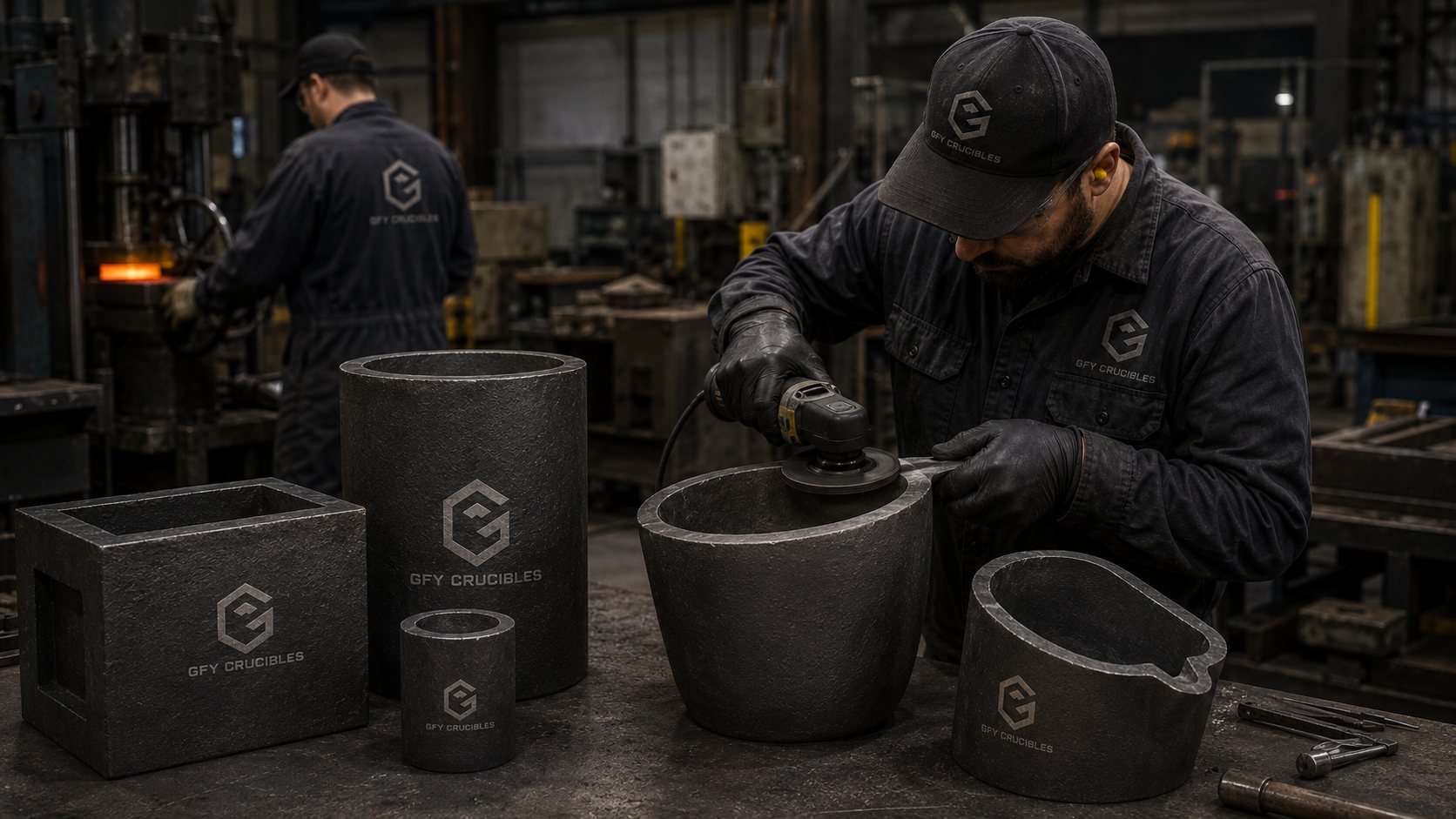
Edges, surfaces, and customer-facing dimensions are checked for usable industrial fit.
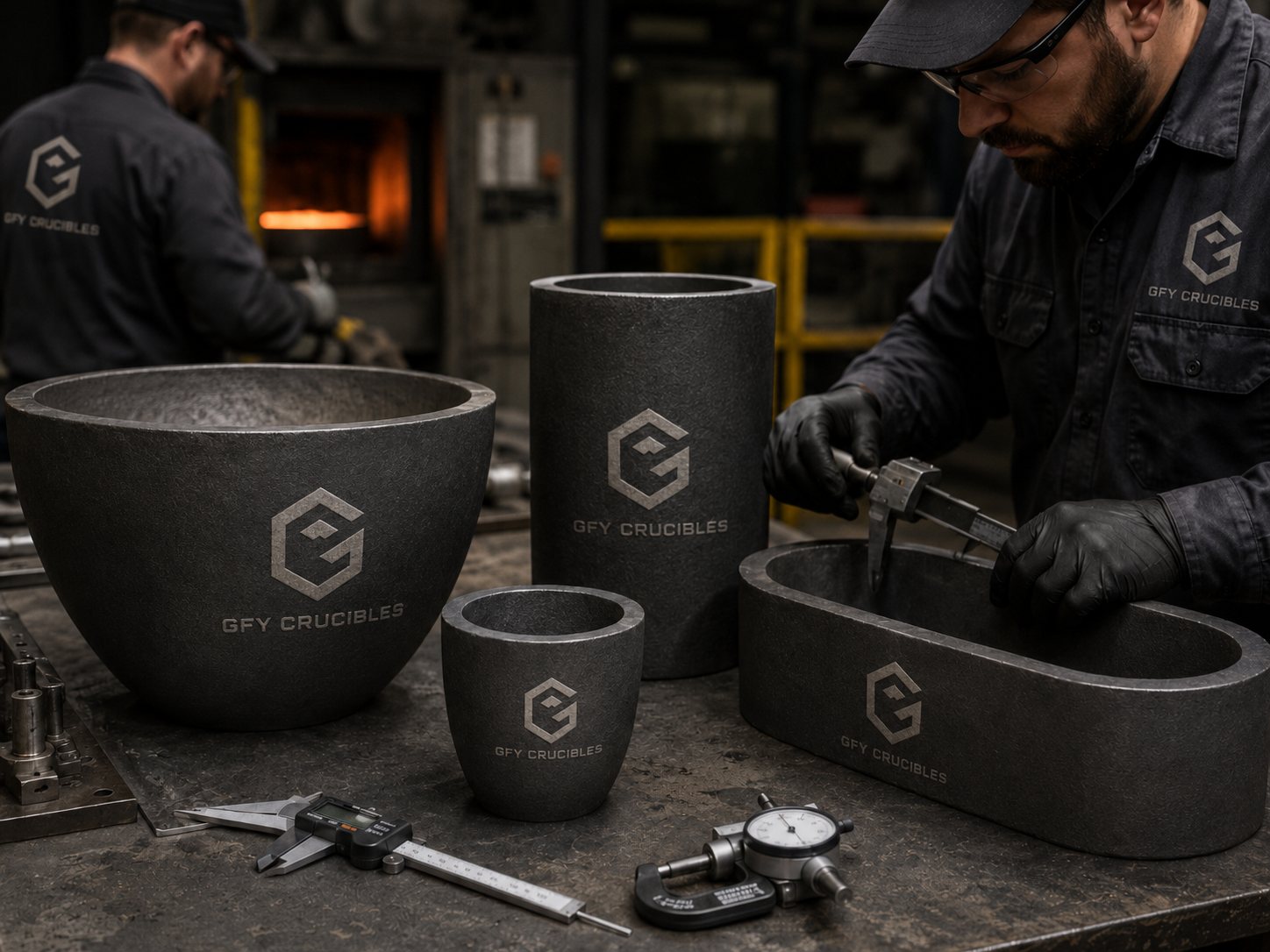
Dimensional checks and visual review support quote consistency and replacement matching.
Finished pieces are staged for industrial packaging and customer delivery requirements.
Capabilities
Support built around the real variables.
Every crucible request is shaped by heat, material, fit, handling, and production timing.
Guidance based on furnace type, processed material, and service environment.
Useful for repeat orders, maintenance stock, and production standardization.
Measurement support for replacement sizing, custom shapes, and application fit.
Considerations for cycling, operating range, thermal shock, and wear.
Round, square, specialty, and replacement geometry quoting.
Quote review for quantities, timelines, and repeat order planning.
Support for facilities replacing worn or discontinued crucibles.
Practical staging and packaging for shipping durable high-heat products.
From heat to inspection
Professional visuals for industrial credibility.
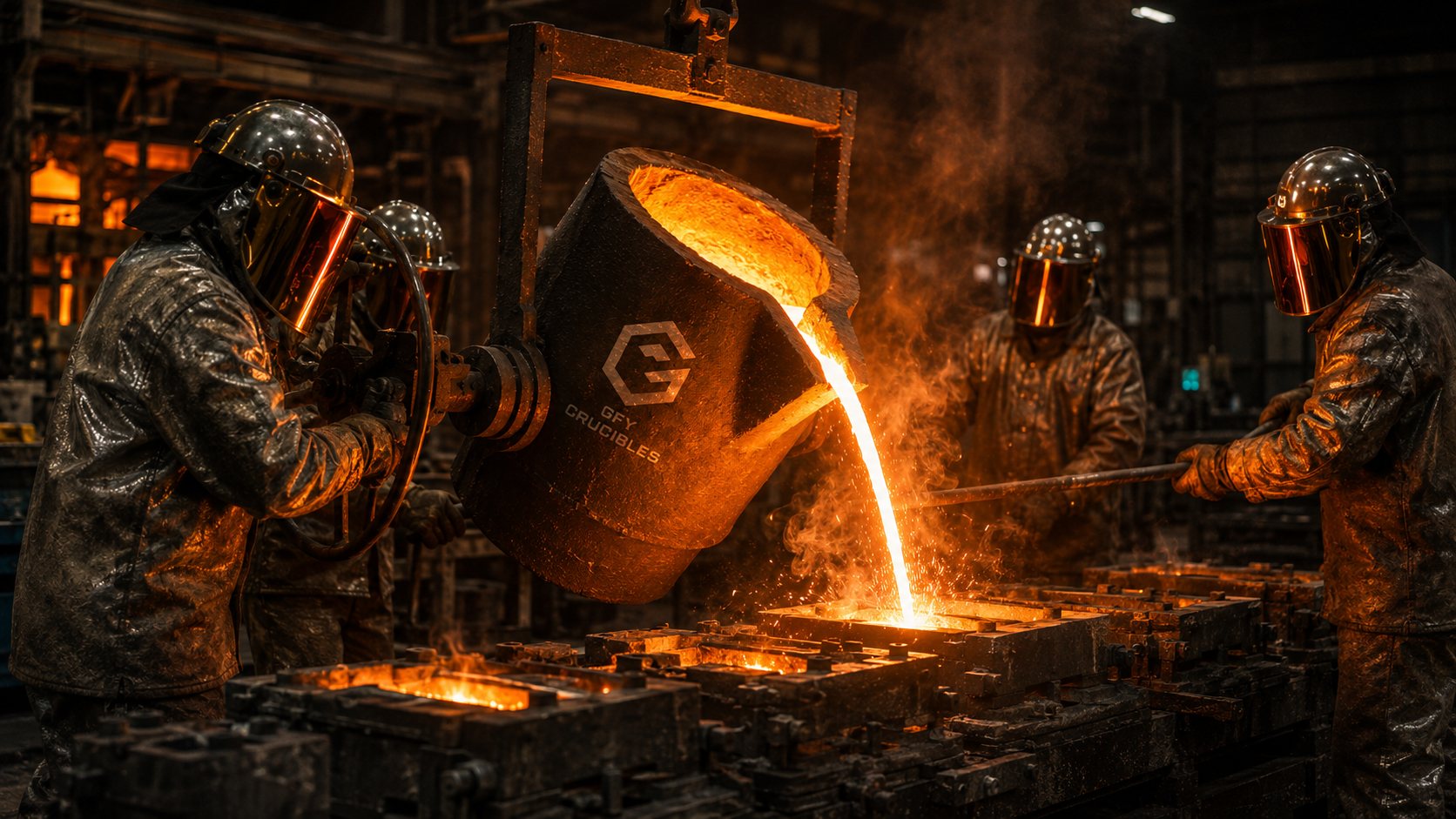
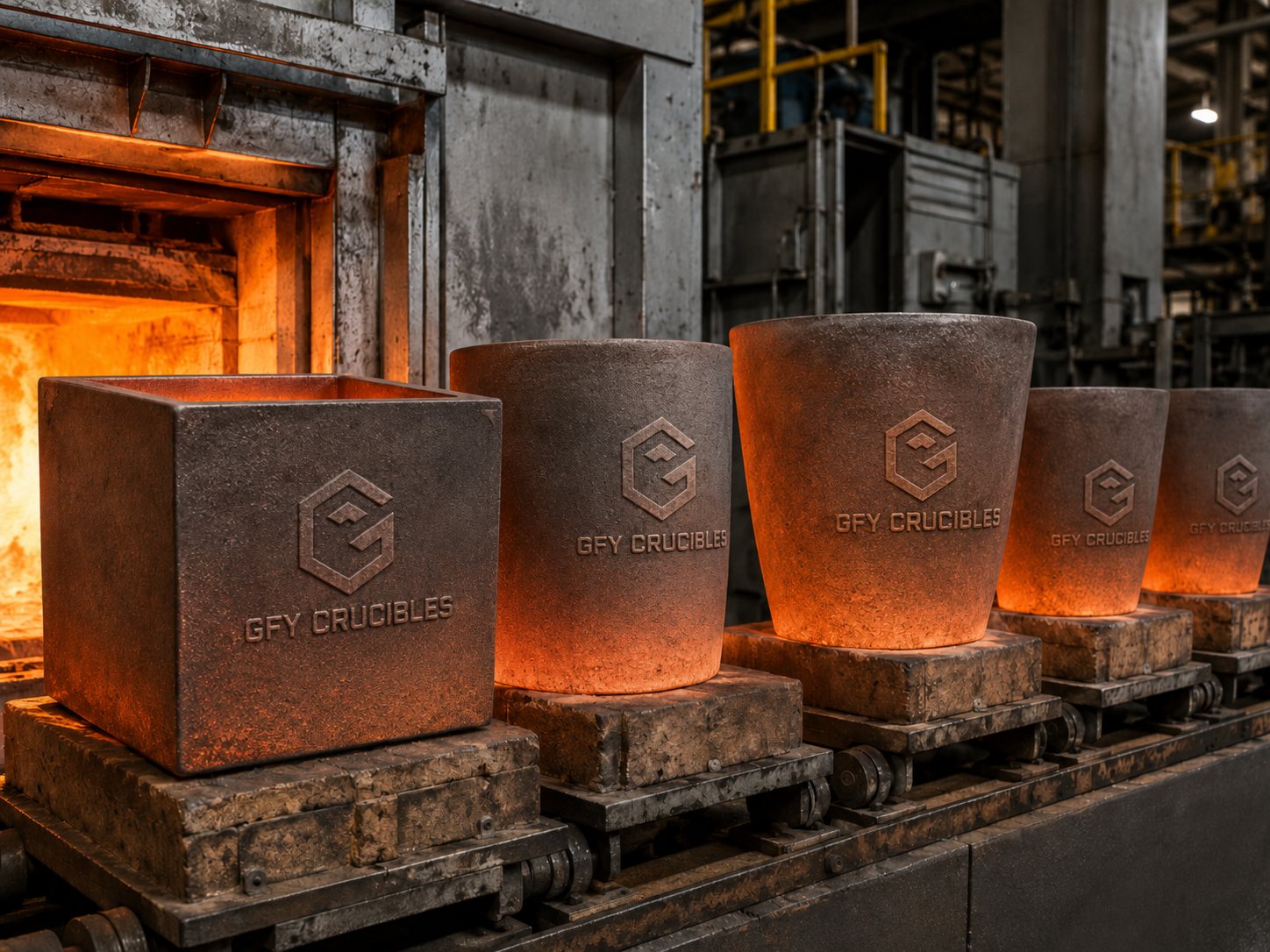
The supplied GFY imagery is used throughout the site to create a cohesive brand system: molten pour scenes, inspection benches, finished product lineups, and high-heat shop environments.
For the live site, these images help the brand feel like a real foundry supplier instead of a generic industrial template.
Have a process requirement?
Start RFQSend the application details.
Include furnace type, material, size or capacity, operating range, quantity, and timeline.